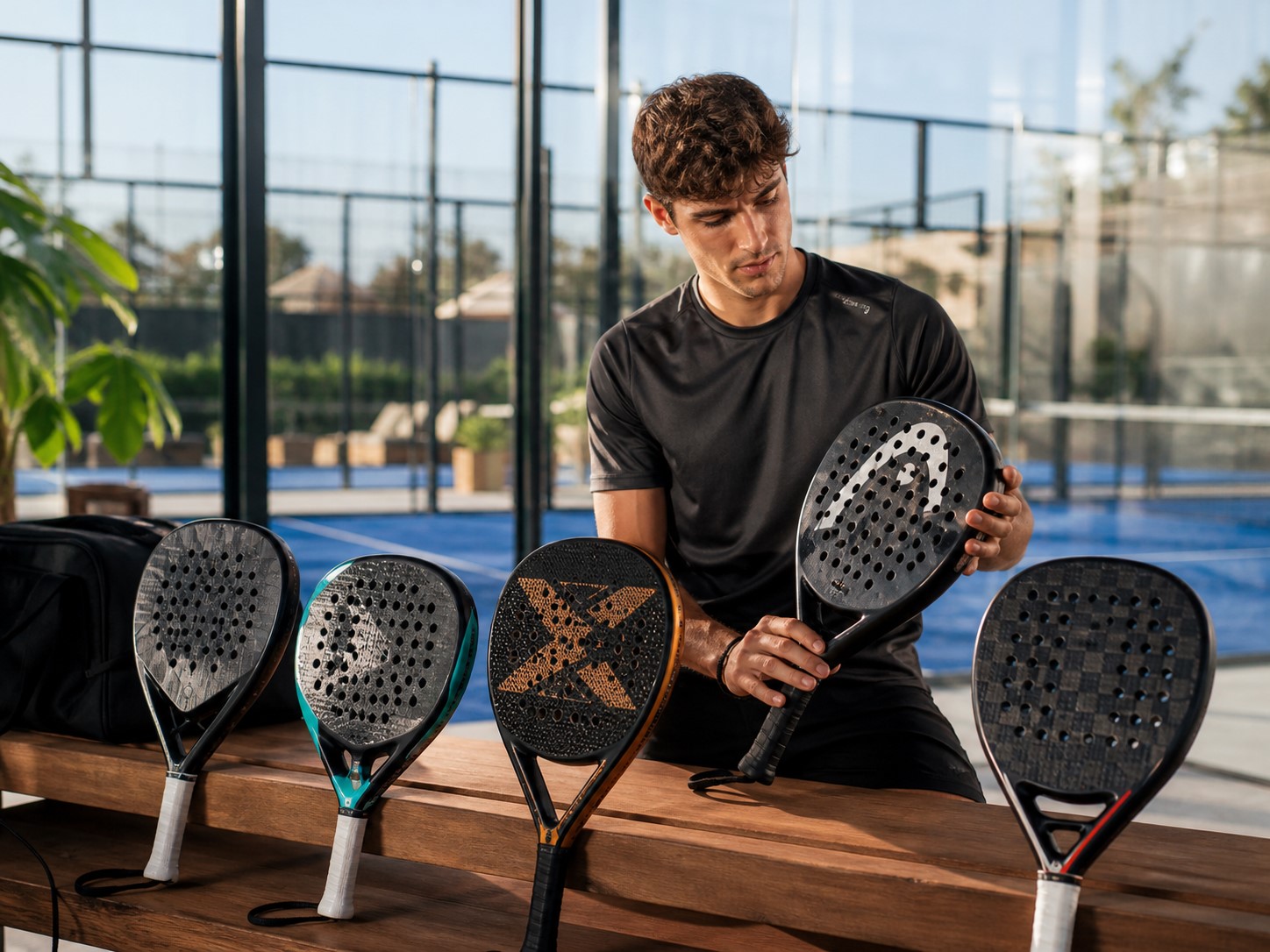
Choosing your first padel racket can feel more complicated than it should. There are different shapes, different weights, different materials, and plenty of marketing language around power, control, spin, comfort, and performance. For someone who is just getting into padel, all of that can quickly become overwhelming.
The truth is that the best padel racket is not the most advanced one. It is the one that helps you play comfortably, build confidence, and improve your technique without fighting the equipment. A good racket should support your game, not make it harder.
Start with your level, not the hype
Before you think about shapes or materials, begin with one simple question: what is your current level? If you are a beginner, your needs are very different from those of an experienced player.
Beginners usually benefit from rackets that offer more control, comfort, and forgiveness. Advanced players may prefer rackets that generate more power or allow for a more aggressive style. If you buy a racket designed for a much higher level than yours, it can feel harder to handle and less forgiving on off-center shots.
Understand the three main racket shapes
One of the biggest factors in choosing a padel racket is shape. Most rackets fall into three broad categories:
- Round — The best starting point for most beginners. Round rackets usually have a larger sweet spot and are easier to control, which helps new players keep the ball in play and feel more comfortable from the start.
- Teardrop — A middle ground between control and power. These rackets often suit intermediate players who want balance rather than one extreme or the other.
- Diamond — Typically aimed at more advanced or attacking players. They tend to offer more power, but the sweet spot is smaller and they can feel less forgiving.
If you are unsure, a round racket is usually the safest and smartest option. It is easier to learn with and gives you more margin while you develop your fundamentals.
Weight matters more than many people think
Racket weight affects comfort, maneuverability, and fatigue. A lighter racket is usually easier to move, which helps with quick reactions and longer sessions. A heavier racket may provide more stability and power, but it can also tire your arm faster.
For beginners, a medium or slightly lighter racket is often the better choice. You want enough stability to feel solid on contact, but not so much weight that your arm starts working against you after a short session.
Pay attention to balance
Balance refers to where the weight is distributed in the racket.
- Low balance — More weight sits closer to the handle. This usually makes the racket easier to control and quicker to maneuver.
- Medium balance — A balanced option that offers a mix of control and power.
- High balance — More weight sits toward the head of the racket, which can help generate power but often feels harder to control.
For new players, low to medium balance is generally more user-friendly. It reduces strain and makes it easier to handle volleys, defensive shots, and quick reactions near the net.
Do not ignore comfort and feel
Two rackets can look similar on paper but feel very different in your hand. Grip comfort, vibration, softness of the face, and overall maneuverability all affect how confident you feel on court.
If possible, test a racket before buying. Even a short session can tell you a lot about whether the racket feels natural, too stiff, too heavy, or simply not right for your game.
Materials and core: what beginners should know
You do not need to become an equipment expert, but it helps to understand the basics.
- Fiberglass faces — Often softer and more comfortable, making them a strong option for beginners.
- Carbon fiber faces — Usually more rigid and performance-oriented, often preferred by advanced players.
- Soft EVA cores — Provide more comfort and a softer touch.
- Hard EVA cores — Can feel firmer and more precise, but sometimes less forgiving.
A softer, more comfortable setup is usually better when you are learning. It helps reduce vibration and makes the racket feel more forgiving on contact.
Questions to ask before buying
- Do I want more control or more power? Beginners should almost always lean toward control.
- Will I play casually or regularly? If you are just trying the sport, start simple. If you expect to play often, it may be worth investing in a comfortable, reliable beginner-friendly racket.
- Do I have any arm discomfort? If yes, comfort and vibration absorption should be a priority.
- Am I choosing based on design alone? Looks matter less than feel, shape, and usability. A beautiful racket that does not suit your level is still the wrong racket.
Common mistakes when choosing a racket
- Buying an advanced racket too early — Many new players choose a racket designed for high-level attackers because it looks impressive. In practice, that often slows their progress.
- Prioritizing power over control — Control builds confidence. Power becomes more useful once your technique improves.
- Ignoring weight and balance — These are major factors in how the racket feels during a match.
- Not testing before buying when possible — A short demo can save you from an expensive mistake.
The best choice for most beginners
If you want a simple answer, most beginners should look for a round-shaped racket with a forgiving sweet spot, medium or light weight, low to medium balance, and a comfortable feel. That combination gives you the best chance to learn the game without making things unnecessarily difficult.
As your level improves, your preferences will become clearer. You may eventually want more power, a different balance, or a firmer feel. But in the beginning, comfort and control should lead the decision.
Final thoughts
Choosing a padel racket does not have to be confusing. Start with your level, focus on comfort and control, and avoid being drawn only to advanced features. The right racket is the one that helps you enjoy the game and improve naturally.
And once you have the right racket, the next step is simple: get on court, play regularly, and let experience guide your future choices.
Frequently asked questions
What is the best padel racket shape for beginners?
For most beginners, round rackets are the best choice because they offer a larger sweet spot and better control.
Should I buy a light or heavy padel racket?
Beginners usually benefit from light to medium weight rackets because they are easier to handle and place less strain on the arm.
Is a more expensive racket always better?
Not necessarily. The best racket is the one that matches your level and playing style, not simply the most expensive one.
Leave a Reply